
Search engine optimization often sounds simple on the surface. You add content, adjust a few settings, and wait for traffic to arrive. Then reality sets in. Weeks pass, and your site still isn’t ranking. That’s why one question comes up more than any other: how long SEO take to show results.
This article explains that timeline in clear, practical terms. You’ll learn what really happens after you start SEO, why results take time, and how to tell whether your work is moving in the right direction.
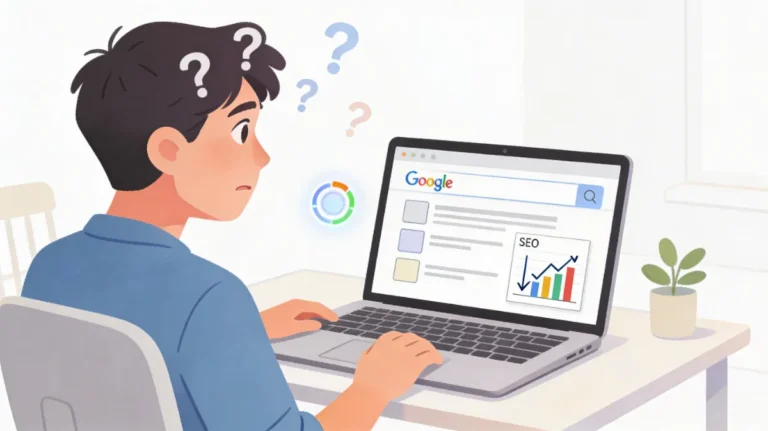
Most people want fast answers from Google. If you build a website or publish a page, it feels natural to expect quick visibility. In the real world, though, search engines don’t work like social media feeds or paid ads.
There’s a gap between expectations and reality.
Many beginners assume SEO is instant. They publish a page and expect to appear on the first page within days. In practice, Google needs time to discover, understand, and trust your content.
Page ranking is affected by several moving parts:
All of these shape your ranking in a meaningful way.

For a brand-new website, SEO is slow at the beginning. Google has no history with your domain yet.
Here’s what usually happens in the first 30–90 days:
First 30 days
Google discovers and indexes your pages. Your site may appear in search, but usually far down the results.
30–60 days
Some pages start getting impressions. You might see your site show up for very specific, low-competition queries.
60–90 days
Early organic search results become visible. Rankings may move from page 8 to page 4, then to page 2 or 3.
It’s important to understand the difference between indexing and ranking.
A page can be indexed in days, but ranking well takes much longer.
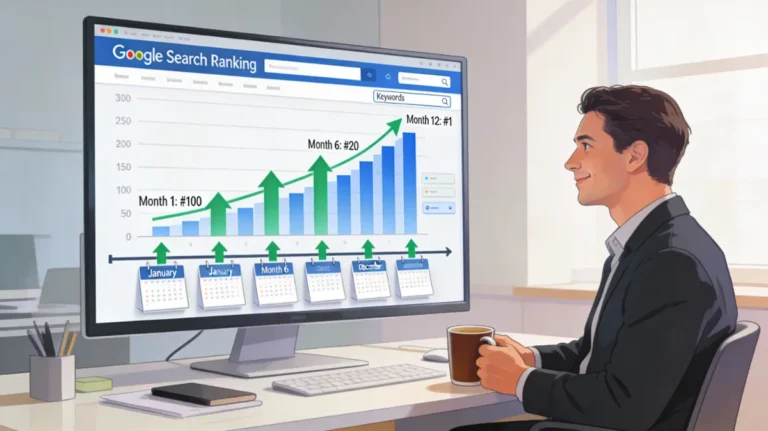
For most websites, real SEO progress follows a pattern:
After 3 months
You start seeing movement. Keywords appear in Search Console. Some pages rank in the top 30–50.
After 6 months
Traffic begins to grow. Pages may reach the top 10–20 for less competitive topics.
After 12 months
Strong pages can rank on the first page. This is when SEO becomes a steady traffic source.
This is why google ranking for website growth is slow but stable. Once you rank, you don’t disappear overnight the way ads do.
SEO is not about quick wins. It’s about building lasting visibility.
People often look for “fast SEO” solutions. These usually fall into two categories:
Paid ads can put you at the top immediately, but those are not organic search results. The moment you stop paying, the traffic stops.
Shortcuts promise quick ranking, but they often hurt your site long-term. Tactics like keyword stuffing, buying bad links, or copying content can cause ranking drops later.
The reality is simple:
There is no safe way to get on top of Google search results instantly using SEO alone.
Real SEO builds authority slowly. That’s how you reach stable, long-term page ranking.

Several factors decide how fast your site moves up.
Website age & authority
Older, trusted sites rank faster. New sites need time to earn trust.
Competition level
The more websites competing for a keyword, the longer SEO takes.
The more specific your keyword, the easier it is to rank.
For example, “student laptop under ₹40,000” is easier than “best laptops.”
Content quality
Helpful, clear, and original pages rank higher than thin or copied content.
Backlinks
Links from other websites act as trust signals.
Technical SEO
Slow sites, broken pages, or mobile issues slow down ranking. Page speed affects how quickly SEO improvements show up. Learn more in How to Improve Website Loading Speed for Better SEO Rankings.
Each of these directly impacts ranking higher on Google. The stronger your site is in these areas, the faster you’ll see progress.
No one can promise exact rankings or fixed timelines.
If someone offers a “guaranteed search engine ranking,” that’s a warning sign.
Red flags include:
What real SEO guarantees look like:
SEO is influenced by Google’s systems, competition, and user behavior. No one controls all of that.
You can’t rush SEO, but you can remove obstacles.
Here are safe ways to boost Google ranking naturally:
On-page SEO basics
Use clear titles, proper headings, and readable content.
Content optimization
Answer real questions. Make pages complete and easy to understand.
Internal linking
Connect related pages so Google understands your site structure.
Speed & UX
Fast loading and easy navigation help both users and rankings.
These steps don’t create instant results, but they shorten the time it takes to improve google search results in a stable way.

A practical checklist:
Fix technical issues
Repair broken links, mobile problems, and slow pages.
Optimize pages
Use clear topics, focused keywords, and helpful formatting.
Create helpful content
Write for real users, not just search engines.
Build authority
Earn mentions and links naturally from relevant sites.
Together, these actions help increase search results on Google and build long-term visibility.
Ranking is not random.
Three main reasons explain the difference:
Authority + trust
Trusted sites with a history of helpful content rank more easily.
User experience
Pages that load fast and are easy to use perform better.
Search intent
Google ranks pages that match what users actually want.
Consistency wins. Publishing regularly and improving old pages is how sites maintain strong organic search results over time.
Want Us To Handle Your SEO?
We’re here to help! Get a free consultation and we’ll answer all your SEO questions personally- UpCrawlMedia

Not all keywords behave the same.
Local keywords
Timelines: 2–6 months
Example: “dentist in Dehradun”
National keywords
Timelines: 6–12 months
Example: “best email marketing tools in India”
Global keywords
Timelines: 12–24 months
Example: “online marketing”
High competition means slower movement. That’s why SEO results depend heavily on your niche and target terms.
SEO progress shows in stages.
Early signs SEO is working:
Impressions increase
Your pages appear more often in searches.
Keyword movement
Positions improve slowly but steadily.
Indexed pages
More of your site is recognized by Google.
Traffic usually follows ranking. Not the other way around.
So, how long SEO take to show results depends on your website, your topic, and how consistently you improve your pages. There isn’t a fixed number of days or weeks that applies to everyone.
SEO works in stages. First, your site gets discovered. Then it starts appearing for small searches. Over time, strong pages move higher and bring steady traffic.
The key is patience combined with regular effort. Small improvements, done consistently, build trust with search engines and with users.
If you’re working on a content-driven website, this guide is just one part of a bigger learning path. From here, it makes sense to explore deeper topics like technical SEO, content planning, or keyword research to strengthen your foundation over time.
You can continue learning with these related guides:
• What Is SEO and How Does It Work?
• How to Improve Website Loading Speed for Better SEO Rankings
• How Heavy Images Hurt Your Website’s SEO
Usually 3–6 months for visible movement, 6–12 months for strong traffic.
Google needs time to index, test, and rank pages. Expect steady growth, not instant success.
You may see indexing and impressions, but not major ranking.
Common reasons include low authority, weak content, or strong competition.
You can make progress with strong content and technical SEO, but backlinks still help build trust.
Focus on fixing issues, creating useful content, and improving site experience.
